Category Archives: Literature

Reading is my first love. I like reading classics, and inspirational books, and biographies, and detective stories, and fantasy, and children’s literature. I try to read a bit of other genres but more often than not I go back to the ones I love love love.

Jumbly Quotes from The BFG

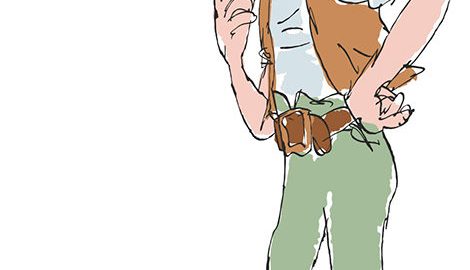
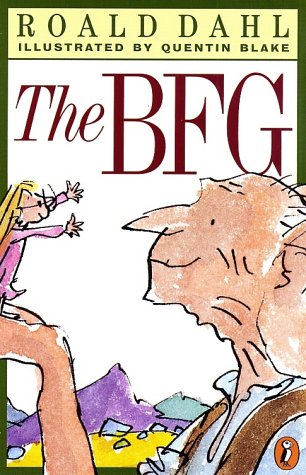
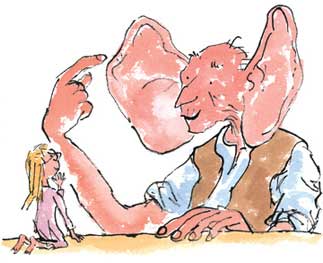
If you have no idea who the BFG is, you should check out my previous blog entry here. The BFG is a nice, jumbly giant who “kidsnatched” the orphan Sophie because she saw him by accident. She learned from him that he was not a “cannibully” giant who ate “human beans,” which apparently taste differently when they’re from different cities or countries.

“Bonecruncher says Turkish human beans has a glamourly flavour. He says Turks from Turkey is tasting of turkey.”

“I suppose they would,” Sophie said.

“Of course they would!” the Giant shouted. “Every human bean is diddly and different. Some is scrumdiddlyumptious and some is uckyslush. Greeks is all full of uckyslush. No Giants is eating Greeks, ever.”

“Why not?” Sophie asked.

“Greeks from Greece is all tasting greasy,” the Giant said….

“As I am saying,” the Giant went on, “all human beans is having different flavours. Human beans from Panama is tasting very strong of hats.”

“Why hats?” Sophie said.

“You is not very clever,” the Giant said, moving his great ears in and out. “I thought all human beans is full of brains, but your head is emptier than a bundongle….”

“The human bean,” the Giant went on, “is coming in dillions of different flavours. For instance, human beans from Wales is tasting very whooshey of fish. There is something very fishy about Wales.”

“You mean whales,” Sophie said. “Wales is something quite different.”

“Wales is whales,” the Giant said. “Don’t gobblefunk around with words. I will now give you another example. Human beans from Jersey has a most disgustable woolly tickle on the tongue,” the Giant said. “Human beans from Jersey is tasting of cardigans.”

“You mean jerseys,” Sophie said.

“You are once again gobblefunking!” the Giant shouted. “Don’t do it! This is a serious and snitching subject. May I continue.”

“Please do,” Sophie said.

“Danes from Denmark is tasting ever so much of dogs,” the Giant went on.

“Of course,” Sophie said. “They taste of great danes.”

“Wrong!” cried the Giant,  slapping his thigh. “Danes from Denmark is tasting doggy because they is tasting of labradors!”

“The what do the people of Labrador taste of?” Sophie asked.

“Danes,” the Giant cried, triumphantly. “Great danes!”

“Aren’t you getting a bit mixed up?” Sophie said.

“I is a very mixed up Giant,” the Giant said. “But I does do my best. And I is not nearly as mixed up as the other giants. I know one who gallops all the way to Wellington for his supper.”

“Wellington?” Sophie said. “Where is Wellington?”

“Your head is full of squashed flies,” the Giant said. “Wellington is in New Zealand. The human beans in Wellington has an especially scrumdiddlyumptious taste, so says the Welly-eating Giant.”

“What do the people of Wellington taste of?” Sophie asked.

“Boots,” the Giant said.

Heehee. That was a long passage (with some parts chopped off – note the ellipses I put in), but I couldn’t resist. The other quotes are a bit shorter, I promise.

“I’m not sure I quite know what that means,” Sophie said.

“Meanings is not important,” said the BFG. “I can’t be right all the time. Quite often I is left instead of right.”

Here’s how the BFG described the other “cannibully” giants:

“All of those man-eating giants is enormous and very fierce! They is all at least two times my wideness and double my royal highness!”

What he means (in case you didn’t quite get it) is that the other giants are twice as wide and high as he is. After all, as the BFG himself says, “Twenty-four feet is puddlenuts in Giant Country.” But don’t listen to everything he says. As he warned Sophie:

“If you listen to everything I am saying you will be getting earache.”

And speaking of ears, you may have noticed the abnormally large ears the BFG has.

“They maybe is looking a bit propsposterous to you,” the BFG said, “but you must believe me when I say they is very extra-usual ears indeed. They is not to be coughed at.”

“I’m quite sure they’re not,” Sophie said.

Big ears or not, the BFG needs to eat. Since he doesn’t want to eat “human beans,” he must settle for an “icky-poo” vegetable called the “snozzcumber.”

“If I dont, I will be nothing but skin and groans.”

“You mean skin and bones,” Sophie said.

Sophie didn’t want to taste it at first, and asked if she really had to eat the dreadful snozzcumber.

“You do unless you is wanting to become so thin you will be disappearing into a thick ear.”

“Into thin air,” Sophie said.

But even though he has to live on snozzcumber (that tastes like rotten fish and frogskins), at least the BFG has a sweet and jumbly fizzy drink called the frobscottle. Unlike our fizzy drinks however, the bubbles go down instead of go up. Upon learning of this, the BFG reacted vehemently.

“Catasterous!” cried the BFG. “Upgoing bubbles is a catasterous disastrophe!”

The problem with talking loudly with Sophie inside his cave is that the other giants became suspicious, and asked him who he was talking to, getting “suspichy” that he is keeping “human beans” as pets. The BFG tried to bluff his way out of it.

“You is welcome to go and search my cave from frack to bunt,” the BFG answered. “You can go looking into every crook and nanny. There is no human beans or stringy beans or runner beans or jelly beans or any other beans in there.”

They had a close call with the other giants, who turned out to be not only “cannibullys” (cannibals), but real bullies as well when it comes to the BFG.

“I didn’t like that,” she said.

“Phew!” said the BFG. “Phew and far between!”

Sophie later learned that the BFG was a dream-collector. He took him with her in the pale country where you can hear dreams sailing along if you have such “propsposterous” ears as the BFG.

“Where are we?” she asked.

“We is in Dream Country,” the BFG said. “This is where all dreams is beginning.”

Unfortunately, sometimes what he catches are not good dreams (or “phizzwizards”), but nightmares as well (or “trogglehumpers”).

“Oh no!” he cried. “Oh mince my maggots! Oh swipe my swoggles!”

“What’s the matter?” Sophie asked.

“It’s a trogglehumper!” he shouted. His voice was filled with fury and anguish. “Oh, save our solos!” he cried. “Deliver us from weasels! The devil is dancing on my dibbler!”

While talking about dreams, Sophie made the interesting discovery that most giants only sleep for two or three hours per day.

“When do you sleep?” Sophie asked.

“Even less,” the BFG answered. “I is sleeping only once in a blue baboon.”

After some time, Sophie asked the BFG how he learned how to write, and found out that he had a Charles Dickens novel for the past 80 years.

“I is reading it hundreds of times,” the BFG said. “And I is still reading it and teaching new words to myself and how to write them. It is the most scrumdiddlyumptious story.”

“Sophie took the book out of his hand.” “Nicholas Nickleby,” she read aloud.

“By Dahl’s Chickens,” the BFG said.

The BFG and Sophie, upon hearing that the other giants were off to England to eat schoolchildren, began to hatch an idea to stop the giants. They went to the Queen of England to ask for her help.

“Your Majester,” he said. “I is your humbug servant…. Oh Queen! Oh Monarcher! Oh, Golden Sovereign! Oh, Ruler! Oh, Ruler of Straight Lines!” 

I will not give away how the story ends, but it’s definitely worth getting a copy of The BFG.

I is the Big, Friendly Giant! I is the BFG!

I’m sure nearly everyone has heard of Charlie and the Chocolate Factory. It introduced me to the work of the famous children’s author, Roald Dahl, and his wonderful illustrator, Quentin Blake. I met Charlie Buckett and Willy Wonka when I was in Grade 5 or 6, thanks to my aunt, Tita Emy, who gave me the book as a gift.

The next time I read anything by Roald Dahl was when I was in Grade 9 or 10, during the Speech Fundamentals class of one of my favorite teachers, Ms. Marj (Margaux) Gutierrez (I know she’s married now, but I don’t know her new last name). We performed snippets from Roald Dahl’s Revolting Rhymes – one was Whirligig Beetles and the other was Cinderella. It was so much fun! I’ll probably write something about Revolting Rhymes some other time, when I’ve bought a new copy (I lost my old one).

Sometime last year, I was feeling pretty bored so I went to PowerBooks and read Charlie and the Great Glass Elevator at the bookstore. It was an easy read, and I finished the book in less than an hour. It was fun as always, but not as good as Charlie and the Chocolate Factory.

I read The BFG this week courtesy of my friend Mike R, who was cleaning out his library and sending all the books he didn’t like to me. I read it in about an hour, as I couldn’t put it down. It was so hilarious! It officially made Roald Dahl one of my favorite authors, and The BFG one of my favorite books.

The BFG (Big, Friendly Giant) captured an orphan girl named Sophie in the dead of night when she happened to see him. Unlike the other nine giants – namely the Fleshlumpeater the Bonecruncher, the Manhugger, the Childchewer, the Meatdripper, the Gizzardgulper, the Maidmasher, the Bloodbottler and the Butcher Boy – the BFG didn’t eat “human beans.”

Before you can fully appreciate the wonderful words of the BFG, you must remember that he hasn’t had much education, and has major problems with his grammar and use of idioms. As he explained sadly to Sophie after she tried to correct him for the nth time, “I is never having a chance to go to school. I is full of mistakes. They is not my fault. I do my best.”

To read more about The BFG (including my favorite quotes), please click here.

A Knight’s Tale from Archenland

This is my first feeble attempt at Narnian poetry, and I wrote this while driving to the office this morning. I guess sometimes traffic is a good thing.

Here is my story, said a knight with a snort,
About what once happened in King Lune’s court.
From out of the blue came two hundred horses –
It was that silly Prince Rabadash’s forces.

But we knew of this Calormene threat beforehand,
We were ready to fight for our dear Archenland.
We had help from our Narnian friends in the battle;
T’was over quickly. And when the dust settled,

A laughter arose – oh what could it be?
The Prince Rabadash, as neat as could be
Got caught in a hook! And now he was screaming
In anger and spite, with his lanky arms flailing.

They took him down, and pondered his fate.
They wanted to free him, but that reprobate
Still shouted at them, full of malice and fury –
Till the Lion showed up and made him a donkey.

Favourite Scenes from The Scarlet Pimpernel

In my previous blog entry, I talked a bit about one of my favorite books, The Scarlet Pimpernel by Baroness Emma Orczy. Here are some of my favorite scenes that made me fall in love with the character of Sir Percy Blakeney. If you haven’t read the book yet and intend to do so – do NOT read this. SPOILER ALERT!


From Chapter 7 – The Secret Orchard

This is the conversation between Marguerite and her brother Armand, where she admitted her estrangement to her husband, and the selfish reasons why she married him in the first place when they did not seem intellectually matched.

“Does Sir Percy Blakeney know that… I mean, does he know the part you played in the arrest of the Marquis de St. Cyr?” 

She laughed – a mirthless, bitter, contemptuous laugh, which was like a jarring chord in the music of her voice.  

“That I denounced the Marquis de St. Cyr, you mean, to the tribunal that ultimately sent him and all his family to the guillotine? Yes, he does know… I told him after I married him…”

“You told him all the circumstances – which so completely exonerated you from any blame?”

“It was too late to talk of ‘circumstances’; he heard the story from other sources; my confession came too tardily, it seems. I could no longer plead extenuating circumstances: I could not demean myself by trying to explain -“

“And?”

And now I have the satisfaction, Armand, of knowing that the biggest fool in England has the most complete contempt for his wife.”

She spoke with vehement bitterness this time, and Armand St. Just, who loved her so dearly, felt that he had placed a somewhat clumsy finger upon an aching wound.

“But Sir Percy loved you, Margot,” he repeated gently.

“Loved me? – Well, Armand, I thought at one time that he did, or I should not have married him. I daresay,” she added, speaking very rapidly, as if she were about to lay down a heavy burden, which had oppressed her for months, “I daresay that even you thought-as everybody else did – that I married Sir Percy because of his wealth – but I assure you, dear, that it was not so. He seemed to worship me with a curious intensity of concentrated passion, which went straight to my heart. I had never loved any one before, as you know, and I was four-and-twenty then – so I naturally thought that it was not in my nature to love. But it has always seemed to me that it must be heavenly to be loved blindly, passionately, wholly… worshipped, in fact – and the very fact that Percy was slow and stupid was an attraction for me, as I thought he would love me all the more. A clever man would naturally have other interests, an ambitious man other hopes… I thought that a fool would worship, and think of nothing else. And I was ready to respond, Armand; I would have allowed myself to be worshipped, and given infinite tenderness in return… “

From Chapter 11 – Lord Grenville’s Ball

This is during the Lord Grenville’s ball where the Prince of Wales, a French spy named Chauvelin (who was sent to England to find out the identity of the Scarlet Pimpernel) and the Blakeneys meet.

“Ah, Monseigneur,” said Chauvelin, significantly, “rumour has it in France that your Highness could–an you would–give the truest account of that enigmatical wayside flower.”

He looked quickly and keenly at Marguerite as he spoke; but she betrayed no emotion, and her eyes met his quite fearlessly.

“Nay, man,” replied the Prince, “my lips are sealed! And the members of the league jealously guard the secret of their chief… so his fair adorers have to be content with worshipping a shadow. Here in England, Monsieur,” he added, with wonderful charm and dignity, “we but name the Scarlet Pimpernel, and every fair cheek is suffused with a blush of enthusiasm. None have seen him save his faithful lieutenants. We know not if he be tall or short, fair or dark, handsome or ill-formed; but we know that he is the bravest gentleman in all the world, and we all feel a little proud, Monsieur, when we remember that he is an Englishman.”

“Ah, Monsieur Chauvelin,” added Marguerite, looking almost with defiance across at the placid, sphinx-like face of the Frenchman, “His Royal Highness should add that we ladies think of him as of a hero of old… we worship him… we wear his badge… we tremble for him when he is in danger, and exult with him in the hour of his victory.”

Chauvelin did no more than bow placidly both to the Prince and to Marguerite; he felt that both speeches were intended – each in their way – to convey contempt or defiance. The pleasure-loving, idle Prince he despised: the beautiful woman, who in her golden hair wore a spray of small red flowers composed of rubies and diamonds – her he held in the hollow of hand: he could afford to remain silent and to wait events.

A long, jovial, inane laugh broke the sudden silence which had fallen over everyone.

And we poor husbands,” came in slow, affected accents from gorgeous Sir Percy, “we have to stand by… while they worship a demmed shadow.”

Everyone laughed – the Prince more loudly than anyone. The tension of subdued excitement was relieved, and the next moment everyone was laughing and chatting merrily as the gay crowd broke up and dispersed in the adjoining rooms.

From Chapter 12 – The Scrap of Paper

This was during the same ball, and contains the short funny poem that Sir Percy invented.

There he stood, the moral support, the cool-headed adviser, surrounded by a crowd of brainless, empty-headed young fops, who were even now repeating from mouth to mouth, and with every sign of the keenest enjoyment, a doggerel quatrain which he had just given forth. Everywhere the absurd, silly words met her: people seemed to have little else to speak about, even the Prince had asked her, with a little laugh, whether she appreciated her husband’s latest poetic efforts.

“All done in the tying of a cravat,” Sir Percy had declared to his clique of admirers.

“We seek him here, we seek him there,
Those Frenchies seek him everywhere.
Is he in heaven?–Is he in hell?
That demmed, elusive Pimpernel?”

From Chapter 16 – Richmond

This was after the drive home from the ball, and Marguerite was feeling guilty and troubled about how she helped Chauvelin in his quest to unmask the Scarlet Pimpernel. She also tried to rekindle her husband’s love.

“Sir Percy.”

“Your servant, Madame.”

Is it possible that love can die?” she said with sudden, unreasoning vehemence. “Methought that the passion which you once felt for me would outlast the span of human life. Is there nothing left of that love, Percy… which might help you… to bridge over that sad estrangement?”

His massive figure seemed, while she spoke thus to him, to stiffen still more, the strong mouth hardened, a look of relentless obstinacy crept into the habitually lazy blue eyes.

“With what object, I pray you, Madame?” he asked coldly.

“I do not understand you.”

“Yet `tis simple enough,” he said with sudden bitterness, which seemed literally to surge through his words, though he was making visible efforts to suppress it, “I humbly put the question to you, for my slow wits are unable to grasp the cause of this, your ladyship’s sudden new mood. Is it that you have the taste to renew the devilish sport which you played so successfully last year? Do you wish to see me once more a love-sick suppliant at your feet, so that you might again have the pleasure of kicking me aside, like a troublesome lap-dog?”

She had succeeded in rousing him for the moment: and again she looked straight at him, for it was thus she remembered him a year ago.

“Percy! I entreat you!” she whispered, “can we not bury the past?”

“Pardon me, Madame, but I understood you to say that your desire was to dwell in it.”

“Nay! I spoke not of that past, Percy!” she said, while a tone of tenderness crept into her voice. “Rather did I speak of a time when you loved me still! and I… oh! I was vain and frivolous; your wealth and position allured me: I married you, hoping in my heart that your great love for me would beget in me a love for you… but, alas!…”

The moon had sunk low down behind a bank of clouds. In the east a soft grey light was beginning to chase away the heavy mantle of the night. He could only see her graceful outline now, the small queenly head, with its wealth of reddish golden curls, and the glittering gems forming the small, star-shaped, red flower which she wore as a diadem in her hair.

“Twenty-four hours after our marriage, Madame, the Marquis de St. Cyr and all his family perished on the guillotine, and the popular rumour reached me that it was the wife of Sir Percy Blakeney who helped to send them there.”

“Nay! I myself told you the truth of that odious tale.”

“Not till after it had been recounted to me by strangers, with all its horrible details.”

“And you believed them then and there,” she said with great vehemence, “without a proof or question – you believed that I, whom you vowed you loved more than life, whom you professed you worshipped, that I could do a thing so base as these strangers chose to recount. You thought I meant to deceive you about it all – that I ought to have spoken before I married you: yet, had you listened, I would have told you that up to the very morning on which St. Cyr went to the guillotine, I was straining every nerve, using every influence I possessed, to save him and his family. But my pride sealed my lips, when your love seemed to perish, as if under the knife of that same guillotine. Yet I would have told you how I was duped! Aye! I, whom that same popular rumour had endowed with the sharpest wits in France! I was tricked into doing this thing, by men who knew how to play upon my love for an only brother, and my desire for revenge. Was it unnatural?”

Her voice became choked with tears. She paused for a moment or two, trying to regain some sort of composure. She looked appealingly at him, almost as if he were her judge. He had allowed her to speak on in her own vehement, impassioned way, offering no comment, no word of sympathy: and now, while she paused, trying to swallow down the hot tears that gushed to her eyes, he waited, impassive and still. The dim, grey light of early dawn seemed to make his tall form look taller and more rigid. The lazy, good-natured face looked strangely altered. Marguerite, excited, as she was, could see that the eyes were no longer languid, the mouth no longer good-humoured and inane. A curious look of intense passion seemed to glow from beneath his drooping lids, the mouth was tightly closed, the lips compressed, as if the will alone held that surging passion in check.

Marguerite Blakeney was, above all, a woman, with all a woman’s fascinating foibles, all a woman’s most lovable sins. She knew in a moment that for the past few months she had been mistaken: that this man who stood here before her, cold as a statue, when her musical voice struck upon his ear, loved her, as he had loved her a year ago: that his passion might have been dormant, but that it was there, as strong, as intense, as overwhelming, as when first her lips met his in one long, maddening kiss.

Pride had kept him from her, and, woman-like, she meant to win back that conquest which had been hers before. Suddenly it seemed to her that the only happiness life could every hold for her again would be in feeling that man’s kiss once more upon her lips.

“Listen to the tale, Sir Percy,” she said, and her voice was low, sweet, infinitely tender. “Armand was all in all to me! We had no parents, and brought one another up. He was my little father, and I, his tiny mother; we loved one another so. Then one day–do you mind me, Sir Percy? the Marquis de St. Cyr had my brother Armand thrashed – thrashed by his lacqueys – that brother whom I loved better than all the world! And his offence? That he, a plebeian, had dared to love the daughter of the aristocrat; for that he was waylaid and thrashed. . .thrashed like a dog within an inch of his life! Oh, how I suffered! his humiliation had eaten into my very soul! When the opportunity occurred, and I was able to take my revenge, I took it. But I only thought to bring that proud marquis to trouble and humiliation. He plotted with Austria against his own country. Chance gave me knowledge of this; I spoke of it, but I did not know – how could I guess? – they trapped and duped me. When I realised what I had done, it was too late.”

“It is perhaps a little difficult, Madame,” said Sir Percy, after a moment of silence between them, “to go back over the past. I have confessed to you that my memory is short, but the thought certainly lingered in my mind that, at the time of the Marquis’ death, I entreated you for an explanation of those same noisome popular rumours. If that same memory does not, even now, play me a trick, I fancy that you refused me all explanation then, and demanded of my love a humiliating allegiance it was not prepared to give.”

“I wished to test your love for me, and it did not bear the test. You used to tell me that you drew the very breath of life but for me, and for love of me.”

And to probe that love, you demanded that I should forfeit mine honour,” he said, whilst gradually his impassiveness seemed to leave him, his rigidity to relax; “that I should accept without murmur or question, as a dumb and submissive slave, every action of my mistress. My heart overflowing with love and passion, I asked for no explanation – I waited for one, not doubting – only hoping. Had you spoken but one word, from you I would have accepted any explanation and believed it. But you left me without a word, beyond a bald confession of the actual horrible facts; proudly you returned to your brother’s house, and left me alone… for weeks… not knowing, now, in whom to believe, since the shrine, which contained my one illusion, lay shattered to earth at my feet.”

From Chapter 31 – The Escape

This is the denouement of the story, where Marguerite first comes face to face with Sir Percy – also known as the Scarlet Pimpernel, who was disguised as a Jew. Under disguise, he was beaten up by the men of Chauvelin, while his wife (who had not recognized him at all) watched nearby.

The physical pain of utter weariness was so great, that she hoped confidently her tired body could rest here for ever, after all the turmoil, the passion, and the intrigues of the last few days–here, beneath that clear sky, within sound of the sea, and with this balmy autumn breeze whispering to her a last lullaby. All was so solitary, so silent, like unto dreamland. Even the last faint echo of the distant cart had long ago died away, afar.

Suddenly… a sound… the strangest, undoubtedly, that these lonely cliffs of France had ever heard, broke the silent solemnity of the shore.

So strange a sound was it that the gentle breeze ceased to murmur, the tiny pebbles to roll down the steep incline! So strange, that Marguerite, wearied, overwrought as she was, thought that the beneficial unconsciousness of the approach of death was playing her half-sleeping senses a weird and elusive trick.

It was the sound of a good, solid, absolutely British “Damn!”

The sea gulls in their nests awoke and looked round in astonishment; a distant and solitary owl set up a midnight hoot, the tall cliffs frowned down majestically at the strange, unheard-of sacrilege.

Marguerite did not trust her ears. Half-raising herself on her hands, she strained every sense to see or hear, to know the meaning of this very earthly sound.

All was still again for the space of a few seconds; the same silence once more fell upon the great and lonely vastness.

Then Marguerite, who had listened as in a trance, who felt she must be dreaming with that cool, magnetic moonlight overhead, heard again; and this time her heart stood still, her eyes large and dilated, looked round her, not daring to trust her other sense.

“Odd’s life! but I wish those demmed fellows had not hit quite so hard!”

This time it was quite unmistakable, only one particular pair of essentially British lips could have uttered those words, in sleepy, drawly, affected tones.

“Damn!” repeated those same British lips, emphatically. “Zounds! but I’m as weak as a rat!”

In a moment Marguerite was on her feet.

Was she dreaming? Were those great, stony cliffs the gates of paradise? Was the fragrant breath of the breeze suddenly caused by the flutter of angels’ wings, bringing tidings of unearthly joys to her, after all her suffering, or–faint and ill–was she the prey of delirium?

She listened again, and once again she heard the same very earthly sounds of good, honest British language, not the least akin to whisperings from paradise or flutter of angels’ wings.

She looked round her eagerly at the tall cliffs, the lonely hut, the great stretch of rocky beach. Somewhere there, above or below her, behind a boulder or inside a crevice, but still hidden from her longing, feverish eyes, must be the owner of that voice, which once used to irritate her, but now would make her the happiest woman in Europe, if only she could locate it.

“Percy! Percy!” she shrieked hysterically, tortured between doubt and hope, “I am here! Come to me! Where are you? Percy! Percy!…”

“It’s all very well calling me, m’dear!” said the same sleepy, drawly voice, “but odd’s life, I cannot come to you: those demmed frog-eaters have trussed me like a goose on a spit, and I am weak as a mouse… I cannot get away.”

And still Marguerite did not understand. She did not realise for at least another ten seconds whence came that voice, so drawly, so dear, but alas! with a strange accent of weakness and of suffering. There was no one within sight… except by that rock… Great God!… the Jew! … Was she mad or dreaming?…

His back was against the pale moonlight, he was half crouching, trying vainly to raise himself with his arms tightly pinioned. Marguerite ran up to him, took his head in both her hands… and look straight into a pair of blue eyes, good-natured, even a trifle amused – shining out of the weird and distorted mask of the Jew.

“Percy!… Percy!… my husband!” she gasped, faint with the fullness of her joy. “Thank God! Thank God!”

“La! m’dear,” he rejoined good-humouredly, “we will both do that anon, an you think you can loosen these demmed ropes, and release me from my inelegant attitude.”

She had no knife, her fingers were numb and weak, but she worked away with her teeth, while great welcome tears poured from her eyes, onto those poor, pinioned hands.

“Odd’s life!” he said, when at last, after frantic efforts on her part, the ropes seemed at last to be giving way, “but I marvel whether it has ever happened before, that an English gentleman allowed himself to be licked by a demmed foreigner, and made no attempt to give as good as he got.”

It was very obvious that he was exhausted from sheer physical pain, and when at last the rope gave way, he fell in a heap against the rock.

Marguerite looked helplessly round her.

“Oh! for a drop of water on this awful beach!” she cried in agony, seeing that he was ready to faint again.

“Nay, m’dear,” he murmured with his good-humoured smile, “personally I should prefer a drop of good French brandy! an you’ll dive in the pocket of this dirty old garment, you’ll find my flask… I am demmed if I can move.”

When he had drunk some brandy, he forced Marguerite to do likewise.

“La! that’s better now! Eh! little woman?” he said, with a sigh of satisfaction. “Heigh-ho! but this is a queer rig-up for Sir Percy Blakeney, Bart., to be found in by his lady, and no mistake. Begad!” he added, passing his hand over his chin, “I haven’t been shaved for nearly twenty hours: I must look a disgusting object. As for these curls…”

And laughingly he took off the disfiguring wig and curls, and stretched out his long limbs, which were cramped from many hours’ stooping. Then he bent forward and looked long and searchingly into his wife’s blue eyes.

“Percy,” she whispered, while a deep blush suffused her delicate cheeks and neck, “if you only knew…”

“I do know, dear… everything,” he said with infinite gentleness.

“And can you ever forgive?”

I have naught to forgive, sweetheart; your heroism, your devotion, which I, alas! so little deserved, have more than atoned for that unfortunate episode at the ball.”

“Then you knew?…” she whispered, “all the time…”

“Yes!” he replied tenderly, “I knew… all the time… But, begad! had I but known what a noble heart yours was, my Margot, I should have trusted you, as you deserved to be trusted, and you would not have had to undergo the terrible sufferings of the past few hours, in order to run after a husband, who has done so much that needs forgiveness.”

“That Demmed, Elusive Pimpernel”

I received a copy of The Scarlet Pimpernel on my 18th birthday from my friend Eric M. For some reason, although I love classics, I was not instantly attracted nor curious about the book, and I only read it after two or three years when I couldn’t find anything else to read. I got it from my bookshelf, dusted off the covers, and entered the absorbing world of the Blakeneys and the French Revolution and the League of the Scarlet Pimpernel. With its mystery, intrigue and adventure, the book quickly became one of my favorites. It is written by Baroness Emmuska Orczy – who has a surname I would not want, since it is too reminiscent of the orcs from The Lord of the Rings. But that’s another story.

The story is set during the bloodthirsty stage of the French Revolution, when the French were killing their aristocrats daily, and a secret society of English men called the League of the Scarlet Pimpernel were daring to rescue their French counterparts. The leader of the society was called the Scarlet Pimpernel, after the small red flower which he uses as his signature.

The story is also about an estranged couple, a rather frivolous and idiotic English fop named Sir Percy Blakeney and his brilliant French wife, Marguerite St. Just. Before her marriage, Marguerite unintentionally sent the family of the French aristocrat the Marquis de St. Cyr to the guillotine through some careless words she said. When Sir Percy found out, he waited for an explanation but heard none from his proud wife.

I like what the author said when asked how she came to think of the story. Her answer was, “It was God’s will that I should… In the chain of my life, there were so many links, all of which tended towards bringing me to the fulfillment of my destiny…” What a lovely way to look at things! I sure hope I’d be able to fulfill my destiny as well, although I seriously doubt if it will involve the creation of some swashbuckling character.

You may check out my favorite scenes and excerpts (including the short poem containing the line “that demmed, elusive Pimpernel”) here.

Listening to Narnia (Part 2)

As mentioned in my previous entry, I recently bought The Chronicles of Narnia Unabridged Boxed Audiobook Set of HarperCollins for my birthday through Amazon.com. It’s been over a month since I first started listening to it (while driving alone – which I don’t really do that often, I usually have either my brother or boyfriend with me), and I’m now at the last CD of the last book.

Since I’ve already given my comments on the first four audiobooks, here are my comments on the last three.

The Voyage of the Dawn Treader – narrated by Derek Jacobi

I have to admit, VDT is my second least favorite of the Narnia books. One reason is that I never really warmed up to the character of Eustace Scrubb. But Derek Jacobi did an amazing job with him. Pre-dragon Eustace was lofty and annoying, but later became actually… likeable. I particularly loved how he read what dragon Eustace was trying to write in the sand and ended with an exasperated “Oh, bother.” I actually had to double check my book to see if it was really there. It was, but I never noticed it before until Derek Jacobi brought it to life. I didn’t really care for his Lucy voice at the beginning, but it grew on me. I actually cried a bit towards the ending of VDT, when Lucy told Aslan, “It isn’t Narnia, you know… It’s you. We shan’t meet you there. And how can we live, never meeting you?”

The Silver Chair – narrated by Jeremy Northam

I was worried before listening to this because as I have mentioned before, SC is my favorite of the Narnia books, mainly because of its theme (remembering and following the signs) and its main character, Puddleglum the Marshwiggle. Although Puddleglum’s voice was not how I imagined it to be, and the Lady of the Green Kirtle did not trill her R’s as much as I thought she should have, it was nevertheless very well done. The banter between Jill Pole and Eustace Scrubb was always lively.

The Last Battle – narrated by Patrick Stewart

I mentioned in my previous entry that my favorite audiobook was The Magician’s Nephew. After the first chapter of hearing Professor X (Xavier) – er, I mean, Patrick Stewart – reading LB, I knew the people from HarperCollins saved the best for last. Patrick Stewart was amazing. There were particular moments in his reading that really stuck to my mind, such as when the Talking Dogs barked: “Welcome! Welcome! We’ll help, we’ll help, help, help. Show us how to help, show us how, how. How-how-how?” I also loved his voice for Puzzle and Shift and Poggin the Dwarf. He was able to distinguish each voice and give it a character of its own, so you always knew who was talking.

After listening to 30+ hours worth of reading, all I can say is that I can’t wait to start listening all over again!

Listening to Narnia (Part 1)

I recently bought The Chronicles of Narnia Unabridged Boxed Audiobook Set of HarperCollins for my birthday through Amazon.com, along with a new hardbound Narnia book. I got my package last 24 June (which was also my 40th month together with my boyfriend Sidney) and I’ve been listening to it whenever I’m driving alone (which isn’t actually that often).

This is my first time to listen to an audiobook and I wasn’t disappointed. At first, I thought there would be sound effects (like perhaps the sound of a river running or horses trotting) in the background, but it wasn’t like that at all. It was just one British voice reading the books out loud to you, changing the tone and accent of each character so that you’d distinctly know which was which.

I’ve already gone through the first four, and here are my comments:

The Magician’s Nephew – narrated by Kenneth Branagh

This is my definitely my favorite audiobook so far. There were two particular character voices I loved. The first is that of the cabby (who later became King Frank). In the book, it says he had a cockney accent, but since I’ve never heard of a cockney accent before, I had no idea how that would sound like. The audiobook really brought it to life for me, especially the part how his speech changed while Aslan was talking to him. The second was the Bulldog who kept arguing with the Elephant by saying, “I object to that remark very strongly.” The way he said it was so funny, I literally burst out laughing.

The Lion, The Witch and the Wardrobe – narrated by Michael York

I can’t actually remember much about this one. It was good, but not quite memorable. I liked the voice of Aslan, Peter and Jadis though.

The Horse and His Boy – narrated by Alex Jennings

This is my second favorite so far, mainly because the narrator was able to invent a distinctly Calormene accent for Rabadash, the Tisroc etc. I love how Rabadash said, “Oh my father and oh the delight of my eyes” in a drawling voice which really sounded as if the Tisroc was not the delight of his eyes. I just have one issue: how come Shasta and Aravis didn’t have the same accent, even though they both grew up in Calormen? Oh well.

Prince Caspian – narrated by Lynn Redgrave

I had apprehensions before listening to this one, because I didn’t know how all the predominantly male characters would be voiced in such a way as to distinguish one from another. You’d have to remember that nearly all the lead characters in Prince Caspian are male (e.g. Peter, Edmund, Caspian, Trumpkin, Dr. Cornelius, Miraz, Trufflehunter, etc). For all the other audiobooks, the narrators were male, and the female characters they had to do usually ranged from only one to three (e.g. Lucy, Susan, Polly, etc). But the narrator actually did a really good job, especially with Trumpkin. I just didn’t like her Aslan voice though.

You can read part 2 here.

Where Is Aslan? (A Poem)

Here’s a Narnian poem by Mike R which he wrote for me for my birthday. Thanks Mike R!

Where Is Aslan?

Where is Aslan? The untamed Lion gone.
The girl child has read the book, Gloriously
dreams of dancing fauns and talking horses.

Where is Aslan? Who sung the world Narnia
She has entered that world to become Queen
Ruling wisely and justly till she dreams.

Where is Aslan? Conqueror of Jadis
The child has grown and Narnia is lost.
Invitations and lace has replaced the song.

Where is Aslan? The Sleeper awakes!
Time has awoken, the stars have broken.
No longer a child, The Holiday has begun.

The Giants of Narnia

Narnia is a land of creatures with creatures like dryads (the spirits of the trees) and naiads (the gods and goddesses of the river), creatures that may not be that familiar to most readers. Then there are the creatures that are more familiar to us, appearing in more popular fairy tales and fantasy stories, like dwarves and giants. But the Narnian giants are unlike the giants from our fairy tales (who sometimes say “fee-fie-fo-fum”), and they are unlike the giants from the surrounding areas of Narnia as well – such as the stupid giants of Ettinsmoor who play cockshies (a stone throwing contest) nearly everyday, and the “gentle” giants of Harfang, whose idea of being gentle turned out to be eating man-pies.

From the seven books of The Chronicles of Narnia, we have two examples of Narnian giants (those that live in the land of Narnia itself), namely Giant Rumblebuffin and Giant Wimbleweather.

We first meet Giant Rumblebuffin in the White Witch’s courtyard in The Lion, the Witch and the Wardrobe. Of course, he was still a stone giant at that time, until Aslan breathed on his feet and revived him. Although it took some time before he could understand what happened, he courteously thanked the Lion and then joined in the Battle of Beruna, where Aslan defeated the White Witch and later crowned the four Pevensies kings and queens of Narnia.

Giant Wimbleweather was also involved in another battle (which happened hundreds of years after the Battle of Beruna) in Prince Caspian. We first meet him arriving at the Dancing Lawn with the centaurs, “carrying on his back a basketful of rather sea-sick dwarfs who had accepted his offer of a lift and were now wishing they had walked instead.” He was unfortunately not very smart and made a critical error during the battle, much to everyone’s dismay.

From these two examples, we see that giants are very polite and thoughtful creatures. When Giant Rumblebuffin finally realized how Aslan has saved him from his stony state, he “bowed down till his head was no further off than the top of a haystack and touched his cap repeatedly to Aslan.” When Aslan asked his name, he respectfully replied, “Giant Rumblebuffin, if it please your honour.” When Aslan requested him to destroy the gate, he immediately obeyed the Lion’s request and remembered to warn the creatures nearby to get out of the way. When Lucy noticed that her “handkerchee” wasn’t helping him much given how small it was for the giant’s huge face, he hastened to assure her that it wasn’t useless. “Not at all. Not at all,” he said politely. “Never met a nicer handkerchee. So fine, so handy. So – I don’t know how to describe it.”

Giant Wimbleweather, although he didn’t have any lines in Prince Caspian, was also a kind, well-mannered creature. As previously mentioned, he offered a lift to the dwarfs on the way to the council, no doubt intending to save them from the fatigue of a long journey. That didn’t turn out quite so well, as we know, since the dwarfs got “sea-sick” from riding on his back. When he made the crucial mistake during the battle, he didn’t vent out his shame and gloom in anger, as you would expect from someone so big, but in sorrow and tears. Again, this did not turn out quite so well, as he unintentionally gave some sleepy mice a shower from the giant tears falling down his face. After being told off by the mice, the giant chose to tiptoe away instead of lashing out. This is a behavior you wouldn’t normally expect from someone who we can assume is the biggest and probably the most powerful in an army.

In life, we have our “gentle giants” as well – those who, despite their size, or influence, or position, are still kind-hearted, and polite, and a pleasure to be with. I’m sure we’ll see them in Aslan’s country in the afterlife.

-oOo-

Excerpts on RUMBLEBUFFIN (from The Lion, the Witch and the Wardrobe)

“Oh!” said Susan in a different tone. “Look! I wonder – I mean, is it safe?”

Lucy looked and saw that Aslan had just breathed on the feet of the stone giant.

“It’s all right!” shouted Aslan joyously. “Once the feet are put right, all the rest of him will follow.”

“That wasn’t exactly what I meant,” whispered Susan to Lucy. But it was too late to do anything about it now even if Aslan would have listened to her. The change was already creeping up the Giant’s legs. Now he was moving his feet. A moment later he lifted his club off his shoulder, rubbed his eyes and said, “Bless me! I must have been asleep. Now! Where’s that dratted little Witch that was running about on the ground. Somewhere just by my feet it was.” But when everyone had shouted up to him to explain what had really happened, and when the Giant had put his hand to his ear and got them to repeat it all again so that at last he understood, then he bowed down till his head was no further off than the top of a haystack and touched his cap repeatedly to Aslan, beaming all over his honest ugly face. (Giants of any sort are now so rare in England and so few giants are good-tempered that ten to one you have never seen a giant when his face is beaming. It’s a sight well worth looking at.)

“Now for the inside of this house!” said Aslan. “Look alive, everyone. Up stairs and down stairs and in my lady’s chamber! Leave no corner unsearched. You never know where some poor prisoner may be concealed.”

And into the interior they all rushed and for several minutes the whole of that dark, horrible, fusty old castle echoed with the opening of windows and with everyone’s voices crying out at once, “Don’t forget the dungeons – Give us a hand with this door! Here’s another little winding stair – Oh! I say. Here’s a poor kangaroo. Call Aslan – Phew! How it smells in here – Look out for trap-doors – Up here! There are a whole lot more on the landing!” But the best of all was when Lucy came rushing upstairs shouting out, “Aslan! Aslan! I’ve found Mr. Tumnus. Oh, do come quick.”

A moment later Lucy and the little Faun were holding each other by both hands and dancing round and round for joy. The little chap was none the worse for having been a statue and was of course very interested in all she had to tell him.

But at last the ransacking of the Witch’s fortress was ended. The whole castle stood empty with every door and window open and the light and the sweet spring air flooding into all the dark and evil places which needed them so badly. The whole crowd of liberated statues surged back into the courtyard. And it was then that someone (Tumnus, I think) first said, “But how are we going to get out?” for Aslan had got in by a jump and the gates were still locked.

“That’ll be all right,” said Aslan; and then, rising on his hind-legs, he bawled up at the Giant. “Hi! You up there,” he roared. “What’s your name?”

“Giant Rumblebuffin, if it please your honour,” said the Giant, once more touching his cap.

“Well then, Giant Rumblebuffin,” said Aslan, “just let us out of this, will you?”

“Certainly, your honour. It will be a pleasure,” said Giant Rumblebuffin. “Stand well away from the gates, all you little ‘uns.” Then he strode to the gate himself and bang – bang – bang – went his huge club. The gates creaked at the first blow, cracked at the second, and shivered at the third. Then he tackled the towers on each side of them and after a few minutes of crashing and thudding both the towers and a good bit of the wall on each side went thundering down in a mass of hopeless rubble; and when the dust cleared it was odd, standing in that dry, grim, stony yard, to see through the gap all the grass and waving trees and sparkling streams of the forest, and the blue hills beyond that and beyond them the sky.

“Blowed if I ain’t all in a muck sweat,” said the Giant, puffing like the largest railway engine. “Comes of being out of condition. I suppose neither of you young ladies has such a thing as a pocket-handkerchee about you?”

“Yes, I have,” said Lucy, standing on tip-toes and holding her handkerchief up as far as she could reach.

“Thank you, Missie,” said Giant Rumblebuffin, stooping down. Next moment Lucy got rather a fright for she found herself caught up in mid-air between the Giant’s finger and thumb. But just as she was getting near his face he suddenly started and then put her gently back on the ground muttering, “Bless me! I’ve picked up the little girl instead. I beg your pardon, Missie, I thought you was the handkerchee!”

“No, no,” said Lucy laughing, “here it is!” This time he managed to get it but it was only about the same size to him that a saccharine tablet would be to you, so that when she saw him solemnly rubbing it to and fro across his great red face, she said, “I’m afraid it’s not much use to you, Mr. Rumblebuffin.”

“Not at all. Not at all,” said the giant politely. “Never met a nicer handkerchee. So fine, so handy. So – I don’t know how to describe it.”

“What a nice giant he is!” said Lucy to Mr. Tumnus.

“Oh yes,” replied the Faun. “All the Buffins always were. One of the most respected of all the giant families in Narnia. Not very clever, perhaps (I never knew a giant that was), but an old family. With traditions, you know. If he’d been the other sort she’d never have turned him into stone.”

-oOo-

Excerpts on WIMBLEWEATHER (from Prince Caspian)

At last there came a night when everything had gone as badly as possible, and the rain which had been falling heavily all day had ceased at nightfall only to give place to raw cold. That morning Caspian had arranged what was his biggest battle yet, and all had hung their hopes on it. He, with most of the Dwarfs, was to have fallen on the King’s right wing at daybreak, and then, when they were heavily engaged, Giant Wimbleweather, with the Centaurs and some of the fiercest beasts, was to have broken out from another place and endeavoured to cut the King’s right off from the rest of the army. But it had all failed. No one had warned Caspian (because no one in these later days of Narnia remembered) that Giants are not at all clever. Poor Wimbleweather, though as brave as a lion, was a true Giant in that respect. He had broken out at the wrong time and from the wrong place, and both his party and Caspian’s had suffered badly and done the enemy little harm. The best of the Bears had been hurt, a Centaur terribly wounded, and there were few in Caspian’s party who had not lost blood. It was a gloomy company that huddled under the dripping trees to eat their scanty supper.

The gloomiest of all was Giant Wimbleweather. He knew it was all his fault. He sat in silence shedding big tears which collected on the end of his nose and then fell off with a huge splash on the whole bivouac of the Mice, who had just been beginning to get warm and drowsy. They all jumped up, shaking the water out of their ears and wringing their little blankets, and asked the Giant in shrill but forcible voices whether he thought they weren’t wet enough without this sort of thing. And then other people woke up and told the Mice they had been enrolled as scouts and not as a concert party, and asked why they couldn’t keep quiet. And Wimbleweather tiptoed away to find some place where he could be miserable in peace and stepped on somebody’s tail and somebody (they said afterwards it was a fox) bit him. And so everyone was out of temper.

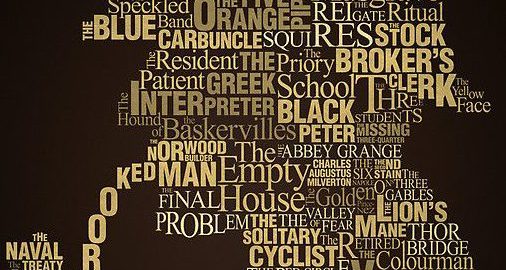
Favorite SHERLOCK HOLMES Quotes

Sherlock Holmes is one of my favorite literary characters of all time; so much that I made time during my two-day tour of London to visit the Sherlock Holmes Museum at 221B Baker Street. I recently bought a new copy of the Sherlock Holmes complete collection since I lent out my old copy and never got it back. While rereading the two volumes a few weeks ago, I decided to highlight my favorite parts. If you want to read my post on my favourite Sherlock Holmes stories, please click here.

The first two quotations below are my absolute favorites, and I can still distinctly remember the first time I read these parts when I was in high school. I believe I have quoted or referred to these quotes in conversation at least ten times since then.

“There is nothing in which deduction is so necessary as in religion,” said he, leaning with his back against the shutters. “It can be built up as an exact science by the reasoner. Our highest assurance of the goodness of Providence seems to me to rest in the flowers. All other things, our powers, our desires, our food, are all really necessary for our existence in the first instance. But this rose is an extra. Its smell and its colour are an embellishment of life, not a condition of it. It is only goodness which gives extras, and so I say again that we have much to hope from the flowers.”  – From The Adventure of the Naval Treaty

“I cannot agree with those who rank modesty among the virtues. To the logician all things should be seen exactly as they are, and to underestimate one’s self is as much a departure from truth as to exaggerate one’s own powers.”  – From The Greek Interpreter

Here are my other favorite quotes, which I only noticed upon re-reading the stories:

“There are in me the makings of a very fine loafer, and also of a pretty spry sort of fellow.” – From The Sign of Four (I can definitely relate to the part about the makings of a very fine loafer. I’m not so sure if I could be spry.)

“You have a grand gift of silence, Watson,” said he. “It makes you quite invaluable as a companion.” – From The Man with a Twisted Lip

“I confess that I have been as blind as a mole, but it is better to learn wisdom late than never to learn it at all.” – From The Man with a Twisted Lip

“I suppose that I am commuting a felony, but it is just possible that I am saving a soul.” – From The Adventure of the Blue Carbuncle (reminds me of the good bishop from Les Miserables)

We can’t command our love, but we can our actions.” – From The Adventure of the Noble Bachelor

“I have no doubt that she loved you, but there are women in whom the love of a lover extinguishes all other loves…” – From The Adventure of the Beryl Coronet

“The public not unnaturally goes on the principle that he who would heal others must himself be whole, and looks askance at the curative powers of the man whose own case is beyond the reach of his drugs.” – From The Stock-broker’s Clerk

I have taken to living by my wits.” – From The Musgrave Ritual

“I have usually found that there was method in his madness.”
“Some folk might say there was madness in his method.” – From The Reigate Puzzle

Art in the blood is liable to take the strangest forms.” – From The Greek Interpreter

“What one man can invent another can discover.” – from The Adventure of the Dancing Men

“Well,” said I, “you call that love, Mr. Carruthers, but I should call it selfishness.”
“Maybe the two things go together.” – From The Adventure of the Solitary Cyclist

“If your heart is as big as your body, and your soul as fine as your face, then I’d ask for nothing better.” – From The Valley of Fear

“Never mind the reward. Just do it for the honour of the thing.” – From The Valley of Fear

“I play the game for the game’s sake.” – From The Adventure of the Bruce-Partington Plans

“Such slips are common to all mortals, and the greatest is he who can recognize and repair them.” – From The Disappearance of the Lady Frances Carfax

“Some people’s affability is more deadly than the violence of coarser souls.” – From The Adventure of the Illustrious Client

If a man has a hobby he follows it up, whatever his other pursuits may be.” – From The Adventure of the Illustrious Client”

But is it coincidence? Are there not subtle forces at work of which we know little?” – From The Adventure of the Blanched Soldier

“To accept such praise was to lower one’s standards.” – From The Adventure of the Lion’s Mane

The example of patient suffering is in itself the most precious of all lessons to an impatient world.” – From The Adventure of the Veiled Lodger

“But is not all life pathetic and futile? Is not his story a microcosm of the whole? We reach. We grasp. And what is left in our hands at the end? A shadow. Or worse than a shadow – misery.” – From The Adventure of the Retired Colourman

“Evil indeed is the man who has not one woman to mourn for him.” – From The Hound of the Baskervilles

 And here’s my new favorite quote only because I’m at this sweet age already:

“… she must be seven-and-twenty now – a sweet age, when youth has lost its self-consciousness and become a little sobered by experience.” – from The Sign of Four